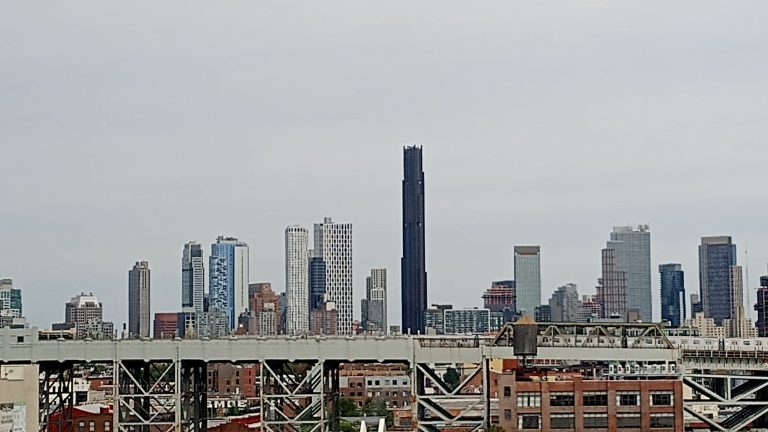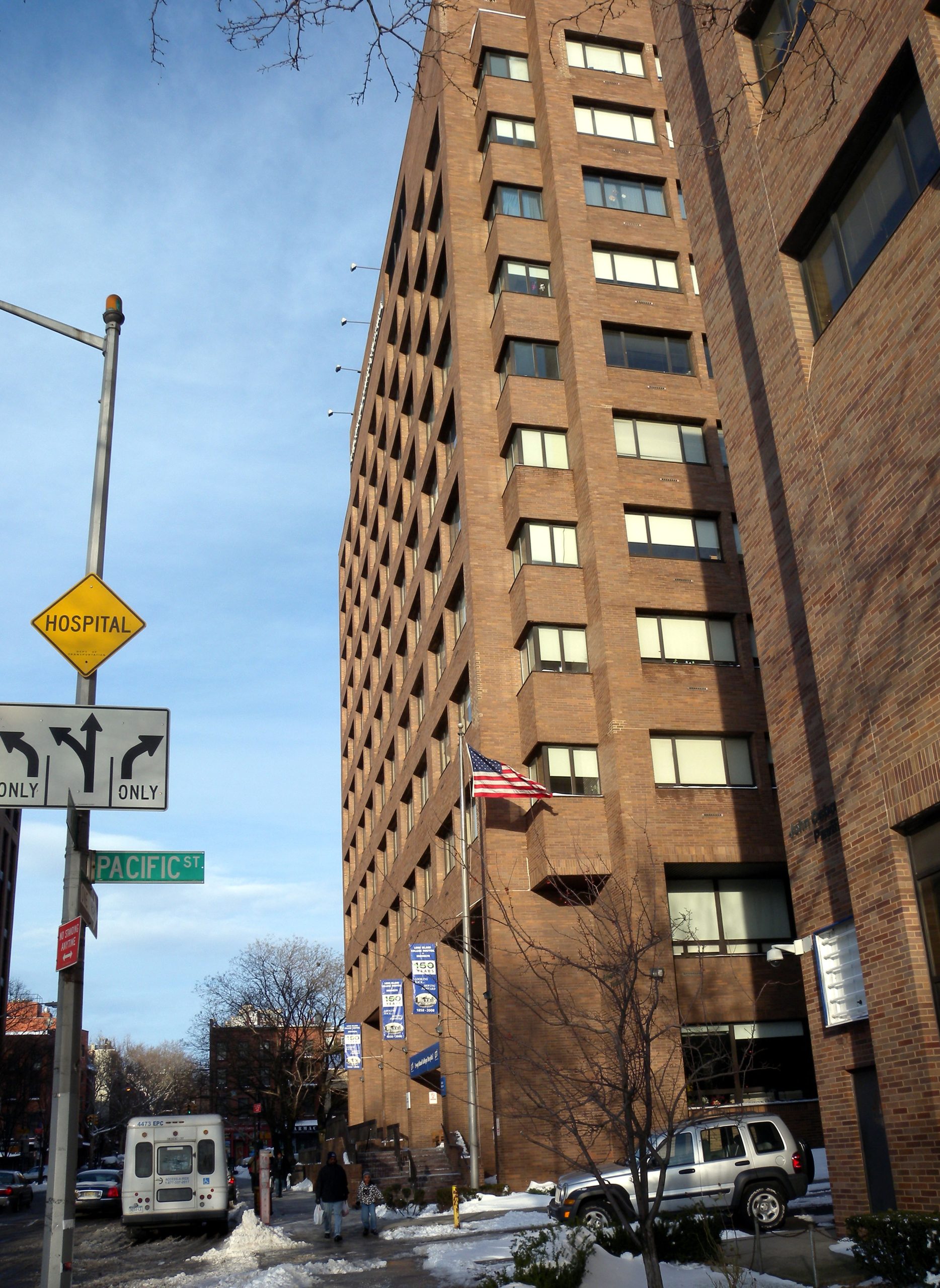
Hush Street is tracking what’s changing in Cobble Hill — one of Brooklyn’s oldest landmarked districts, and a neighborhood whose development story looks nothing like its neighbors’. Brooklyn Heights has an active mega-rezoning working through city review. DUMBO has zero ULURP activity but a real commercial-repositioning boom. Cobble Hill has neither: a full sweep of city rezoning records found nothing currently moving through Cobble Hill’s own blocks at all, because a landmarked, fully built-out rowhouse district structurally doesn’t generate that kind of activity.
What Cobble Hill has instead is a decade-old hospital site finally moving again under new ownership, one real city infrastructure project, and a landmarked core absorbing tens of millions of dollars in private renovation — plus, this pass, one boundary correction worth flagging up front: several projects marketed by real-estate press as “Cobble Hill” turned out, on a direct records check, to sit in a different community district entirely. We explain why below rather than quietly including them.
| Project | Location | Status |
|---|---|---|
| 1The Former Long Island College Hospital Site | Hicks, Amity & Henry Streets | Active / Multiple Parcels |
| 2Court Street Road Diet & Reconstruction | Schermerhorn St to Hamilton Ave | Under Construction |
| 3Cobble Hill’s $61 Million Renovation Wave | Neighborhood-wide | Active / Ongoing |
| 4Kane Street Synagogue’s $9 Million Renewal | 236 Kane Street | Under Construction / Phased |
| 5A Quiet Construction Project at P.S. 29 | 425 Henry Street | Under Construction |
The Projects Moving Through a Neighborhood That Mostly Doesn’t Build New
A hospital site restarting, one infrastructure project, and a landmarked core absorbing millions in renovation.
The Former Long Island College Hospital Site
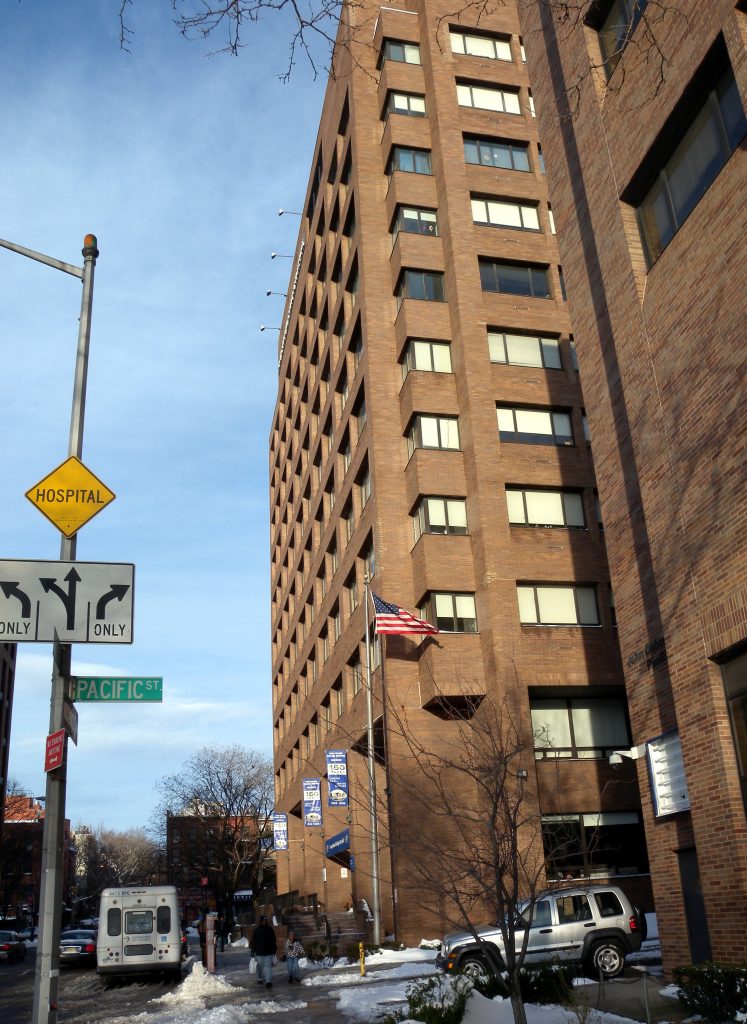
One Site, Four Owners, a Decade of Piecemeal Redevelopment
Long Island College Hospital closed for good on August 30, 2014, after 156 years.
SUNY, which had run the hospital since a 2011 merger, sold most of the campus’s development rights to Fortis Property Group. Fortis built and sold out two early phases: “5 River Park,” a 16-story, 25-unit condo tower at 347 Henry Street, complete since 2019; and the Polhemus Residences and Townhouses along Amity Street, inside and beside the campus’s landmarked 1897 clinic building.
In 2022, Fortis sold its remaining unbuilt rights to Madison Realty Capital. Madison is now building “2 River Park,” a 38-story, 102-unit tower at 339 Hicks Street targeting completion in 2026 — but in 2024 sold an adjacent piece, 91-95 Pacific Street, to Rockrose Development for $65 million.
Separately, in early 2026, Sunlight Development bought a still-vacant parcel at 350 Hicks Street for $29.5 million — a site Fortis had once planned for a 17-story tower that was never built.
The Last Piece: SUNY Sells Directly to Rockrose
One major piece of the original campus never got developed at all: the old Polak Pavilion building and surrounding land at 363 and 365 Hicks Street, 97 Amity Street, and 340 Henry Street — roughly 258,000 square feet on a full city block.
SUNY had a deal with Fortis for this piece too, but Fortis never proceeded. That collapsed into a lawsuit between SUNY and Fortis in 2023.
Now SUNY is selling the parcel directly to Rockrose Development — the same company that bought the adjacent Pacific Street lot in 2024 — for $100 million. The deal cleared the New York Attorney General’s office the week of February 3, 2026. Rockrose and SUNY did not respond to reporters’ requests for comment at the time.
The first sign of what comes next arrived that spring: DOB records show Rockrose filed plans for a major alteration covering roughly 298,322 square feet at 340 Henry Street on April 10, 2026 — the first building-plan filing anywhere on this long-vacant parcel since the sale closed. The filing is for a major alteration, not new construction, and no public renderings or unit counts have surfaced yet; we’ll update this section as the scope becomes clearer.
Where NYU Langone Actually Is Now
One thing the old campus’s redevelopment obscures: NYU Langone’s actual current healthcare presence in Cobble Hill isn’t on the old hospital site at all.
NYU Langone built a new, freestanding, five-story, 165,000-square-foot ambulatory care and emergency care center at 70 Atlantic Avenue, which opened April 1, 2023, replacing an interim emergency room that had operated nearby. It’s a separate building, on a separate site, with no connection to the parcels now changing hands.
Sources: Commercial Observer; Brooklyn Eagle; Brooklyn Eagle (Sunlight Development); New York YIMBY; CityRealty; Brooklyn Eagle (NYU Langone opening)
Court Street Road Diet & Reconstruction
The One Public-Infrastructure Project We Found
Cobble Hill’s own blocks don’t currently host any DOT, DEP, DDC, Parks, MTA, or EDC capital project of real scale — we checked each explicitly rather than waiting for one to surface in press coverage. The one clear exception is Court Street, which forms the neighborhood’s entire eastern boundary.
DOT is rebuilding a 1.3-mile stretch of Court Street, from Schermerhorn Street in Downtown Brooklyn down through Cobble Hill and Carroll Gardens to Hamilton Avenue at the edge of Red Hook. The corridor previously had no protected bike lane despite carrying roughly 1,000 cyclists a day. The project removes one general travel lane to add one, along with new pedestrian islands and curb extensions at intersections.
DOT presented the project to Brooklyn Community Board 6 in June 2025. Work was still active as of the most recent source found in this pass; no public completion date has been announced.
One Project, Two Neighborhood Trackers
This same 1.3-mile DOT project continues south through our Carroll Gardens page, which covers its Carroll Gardens exposure down to Hamilton Avenue.
What We Checked and Didn’t Find
Two Culver Line subway stations sit closest to Cobble Hill — Bergen Street and Carroll Street. Neither appears on the MTA’s 2025–2029 Capital Plan accessibility list, so no elevator or ADA upgrade is currently funded at either one.
We also looked for DEP sewer, water, or resiliency work specific to Cobble Hill and found nothing beyond citywide generalities — plausibly because Cobble Hill, unlike Red Hook or Gowanus, isn’t a waterfront or combined-sewer-overflow priority area, though we can’t confirm that’s the reason.
One more thing worth ruling out directly: a genuinely large, currently-moving Atlantic Avenue rezoning is in the news right now, and it is not this neighborhood’s story. That rezoning runs from Vanderbilt Avenue to Nostrand Avenue, entirely within Crown Heights, Bedford-Stuyvesant, and Prospect Heights — several miles from Cobble Hill’s short stretch of Atlantic Avenue near the waterfront.
Sources: NYC Department of Transportation, Community Board 6 presentation, June 2025; Brooklyn Bridge Parents streetscape roundup, October 2025; MTA 2025–2029 Capital Plan accessibility station list
Cobble Hill’s $61 Million Renovation Wave
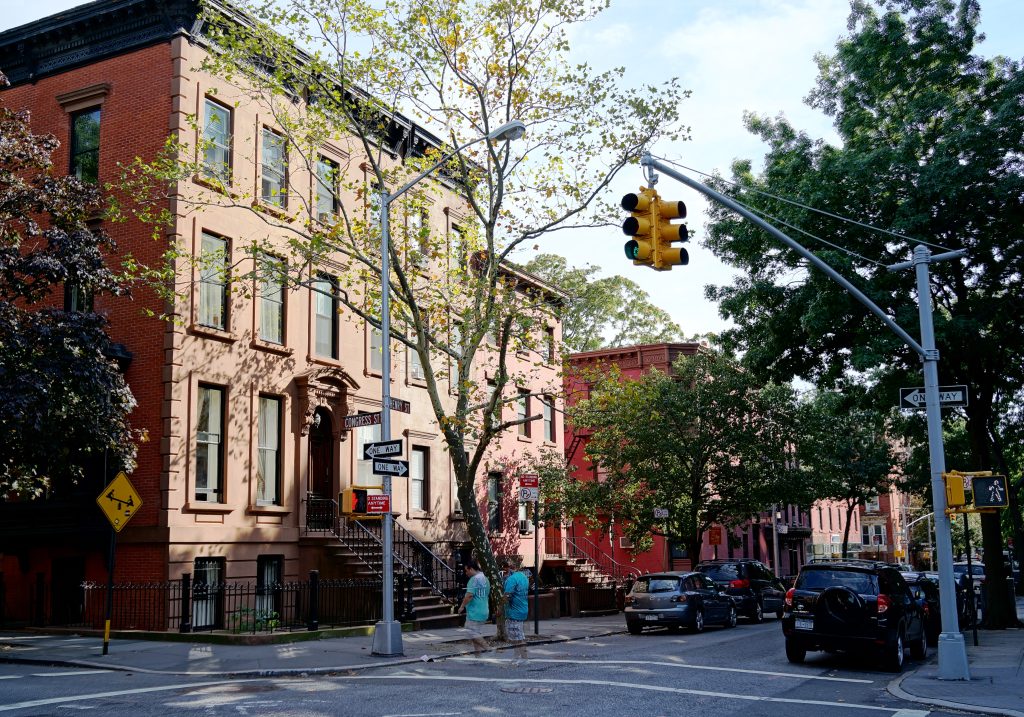
A Landmarked District Can’t Build New. It’s Renovating Instead.
Cobble Hill’s historic district makes ground-up construction essentially impossible across most of the neighborhood. So we asked a different question: how much money is actually moving through the district’s existing rowhouses right now?
We pulled every Department of Buildings permit filed across Cobble Hill’s 27-block core, going back to January 2023, and filtered to jobs worth $25,000 or more. The result: 340 permits, spread across 152 distinct addresses, totaling just over $61.3 million in declared construction value. The overwhelming majority of that — more than $57.7 million — belongs to private owners rather than institutions.
No single renovation in that pull is individually newsworthy at the scale a typical tracker entry needs. This is a fully built-out, landmarked, entirely rowhouse-and-townhouse district; there’s no ground-up development happening because there’s almost nowhere it could happen. But the aggregate volume is real, and as far as we can tell, nobody has put a number on it before.
Three Examples, Pulled From the Landmarks Record
We cross-checked the DOB permits against Landmarks Preservation Commission filings, focusing on the highest tier of landmarks review — a full Certificate of Appropriateness, reserved for genuinely visible exterior or structural change, not routine repairs.
At 168 Pacific Street, $882,662 in DOB permits accompanies LPC approval for a combined rear-yard and rooftop addition.
At 195 Congress Street, two separate general-construction permits in 2024 and 2025 total more than $2 million at a single address — one of the largest single-property values in the entire pull.
And along Court Street, five consecutive storefront-renovation filings between 214 and 230 Court Street — all filed within an eight-month span by the same expediter — suggest either one landlord upgrading a run of storefronts or several small, unrelated jobs handled by the same filer; we haven’t been able to tell which.
Sources: NYC DOB permit records (DOB NOW: Build); NYC Landmarks Preservation Commission permit records
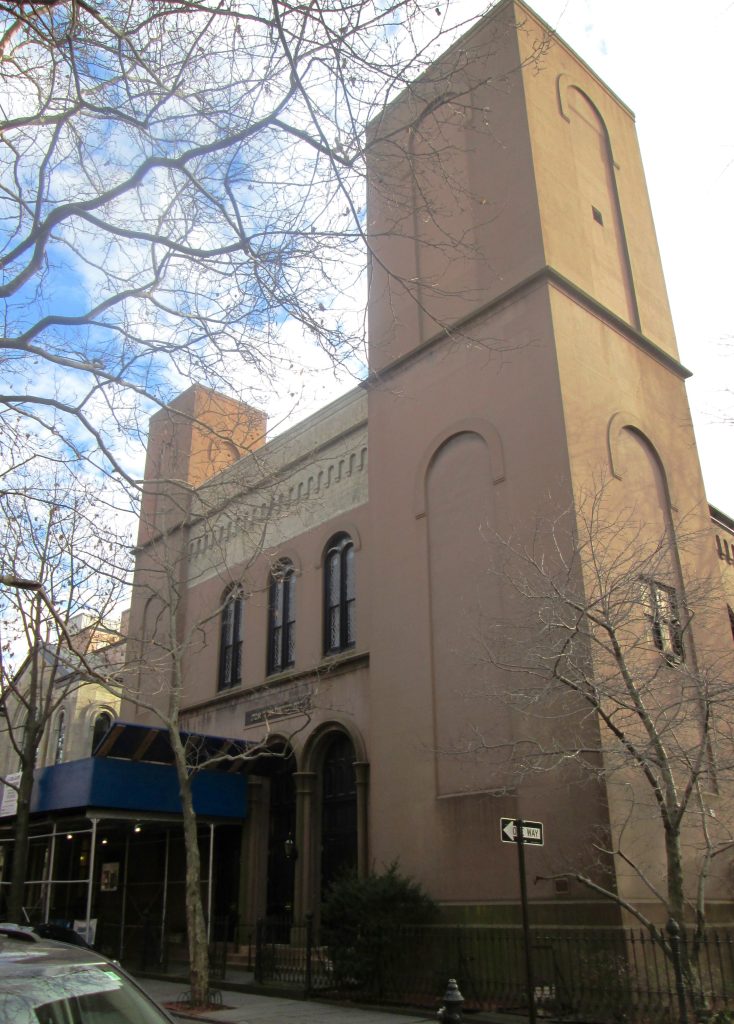
Kane Street Synagogue’s $9 Million Renewal
Starting With the Sanctuary
Kane Street Synagogue — home to Congregation Baith Israel Anshei Emes, Brooklyn’s oldest continuously operating synagogue — is roughly two-thirds of the way through a $9 million capital campaign, according to the congregation’s own detailed public materials.
The project, designed by the architecture firm H3, is deliberately structured to be completed in phases “over time” rather than all at once. The sanctuary came first, partly because it was the one part of the building that needed ADA and code compliance work. That phase alone is budgeted at $2.5 million.
The sanctuary scope covers new movable pews, a structurally stabilized choir loft, a new Bimah and Amud, restrooms, finishes, and electrical and lighting upgrades, along with a new fire suppression system and updated audio-visual equipment. Beyond the sanctuary, the broader campaign envisions renovating the rest of the historic building and expanding the congregation’s Goldman Education Center.
We found no independent news coverage of the current renovation phase — the sourcing here is the congregation’s own campaign materials, disclosed as such.
Sources: Kane Street Synagogue capital campaign; H3
A Quiet Construction Project at P.S. 29
City permit records show the NYC School Construction Authority as owner of record on active Foundation, General Construction, Structural, and Mechanical Systems permits at P.S. 29, the public elementary school at 425 Henry Street — roughly $1.3 million in combined declared value, with the most recent filing dated March 2026.
We found no press coverage describing what’s actually being built — an addition, a capacity expansion, or a major systems replacement are all consistent with this mix of permit types, but nothing in the public record confirms which. The permits themselves are enough to say real, funded construction is underway at a neighborhood public school right now. We’ll update this section if a clearer picture emerges.
Sources: NYC DOB permit records (DOB NOW: Build)
Have a tip on a Cobble Hill project we should be tracking? Let us know.
By Hush Street Editorial Updated Built from city filings and published reporting. About Hush Street