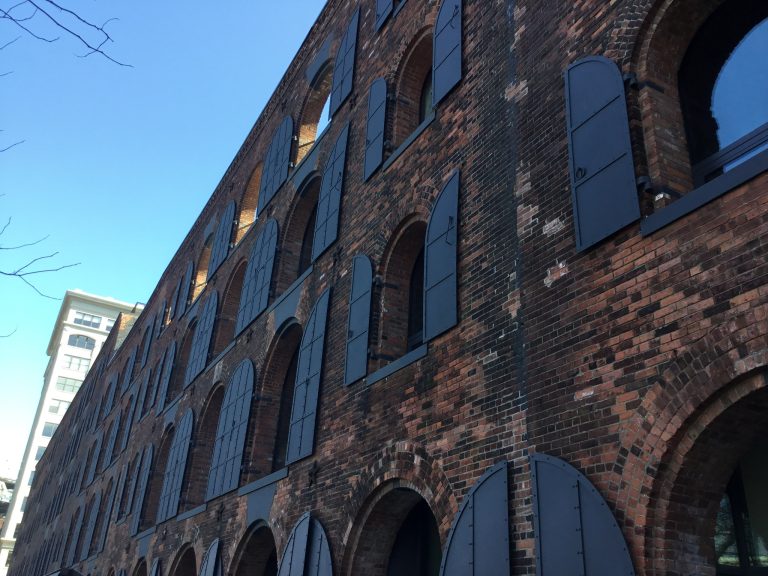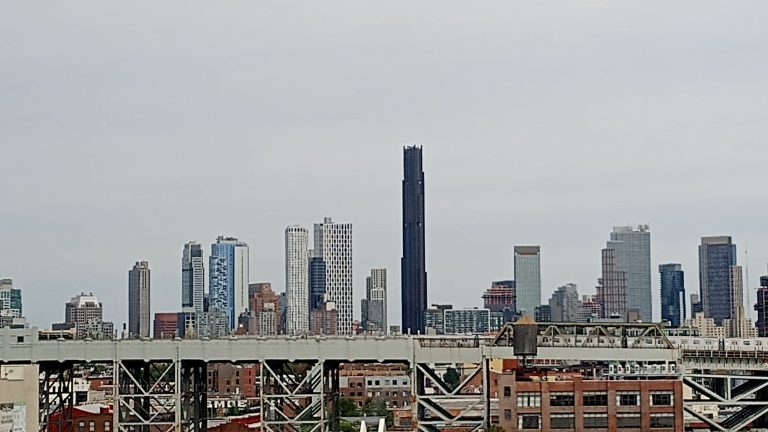
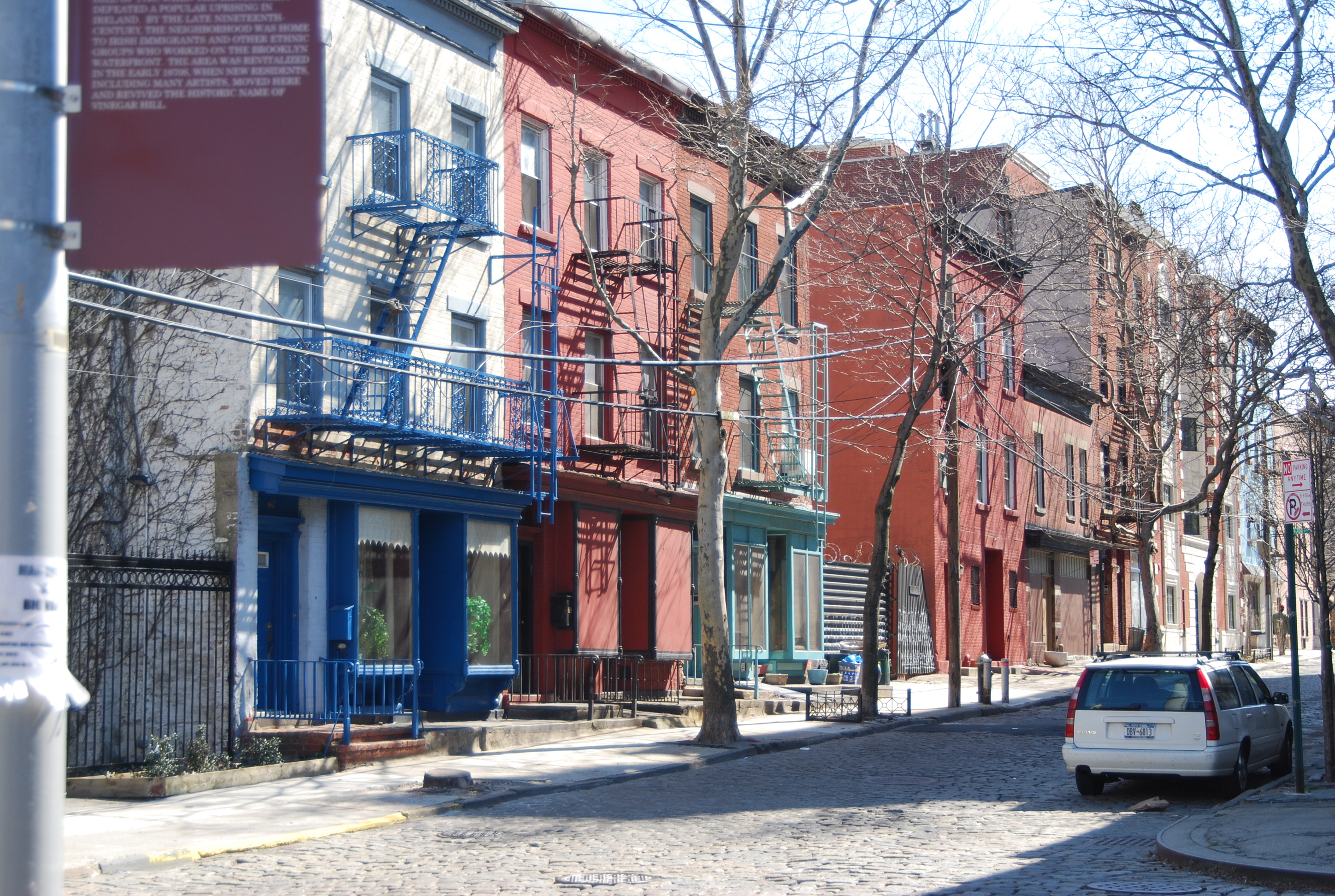
Hush Street is tracking what’s changing in Vinegar Hill — a tiny, largely landmarked waterfront enclave squeezed between DUMBO, Downtown Brooklyn, and the Brooklyn Navy Yard. Federal- and Greek Revival-era rowhouses line Belgian-block streets around a historic district that’s one of the smallest in New York City, and by the numbers, very little is actually being built here: a structured-record check found no significant Landmarks, zoning, or land-use activity across the neighborhood this pass.
That quiet is broken by two exceptions, both enormous by any Brooklyn standard: a roughly 1,500-apartment mixed-use complex from Alloy Development entering public review, and Con Edison’s $810 million transmission hub rising on the site of the neighborhood’s old power plant. A third, smaller story just finished: a 218-unit rental building that went up largely unnoticed a few blocks away. We’re not padding this page with weak candidates to make it look busier than it is — these three projects are genuinely the neighborhood’s current story, in a place that has otherwise changed very little in decades.
| Project | Location | Status |
|---|---|---|
| 1240 Nassau Street | Nassau St. & Navy St. | Public Review (ULURP) |
| 2Brooklyn Clean Energy Hub | Hudson Ave., East River | Under Construction |
| 3218 Front Street | Front St. & York St. | Completed |
The Projects Reshaping Vinegar Hill
A 1,500-apartment megaproject, an $810 million power hub, and a 218-unit building that quietly finished — in a neighborhood that’s otherwise barely changed in years.
A Boys & Girls Club Site Is Becoming 1,500 Apartments
A Former Boys & Girls Club, Rezoned for Scale
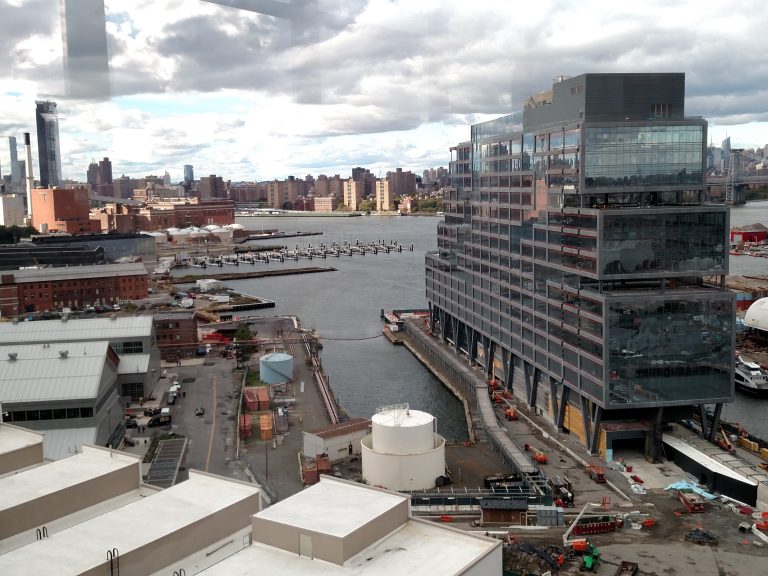
Alloy Development bought the Madison Square Boys & Girls Club’s Navy Yard Clubhouse site in 2023. What it’s proposing now is a roughly 1.4-million-square-foot rezoning — towers reported at approximately 700 and 850 feet — split across what press coverage describes inconsistently as three or four buildings. We’re not resolving that discrepancy here; it may reflect a design that has shifted between announcements.
The plan bundles far more than apartments: a 120,000-square-foot K-8 public school designed by Architecture Research Office, community and cultural facility space, ground-floor retail, and nearly an acre of new outdoor space, developed jointly with the NYC Educational Construction Fund and GFB Development.
A Long Runway Before Ground Breaks
Alloy says it has run a genuinely extensive community process since acquiring the site — more than 50 meetings with local organizations, NYCHA tenant associations, and elected officials. Public review began in July 2026; if approved, construction isn’t expected to start before 2027, meaning any visible change on the ground here is still at least a year or more away.
Sources: New York YIMBY; Brooklyn Paper; 6sqft; Alloy Development
An Old Power Plant Becomes a Wind-Power Gateway
From the World’s Largest Turbine to a Wind-Power Gateway
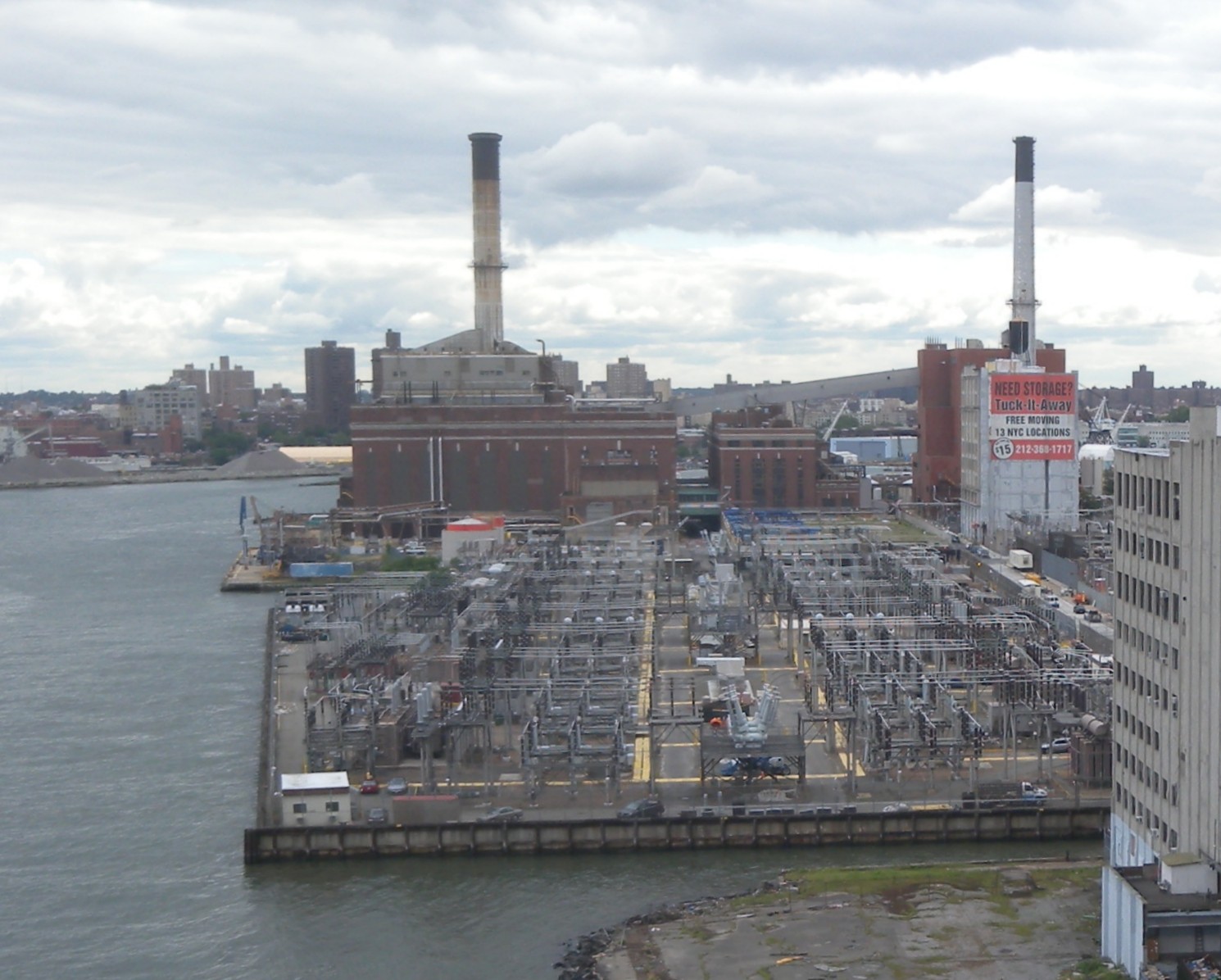
The neighborhood’s defining landmark — a smokestack visible from blocks away — belongs to the old Hudson Avenue Generating Station, which housed the world’s largest turbine when it opened in 1932 and supplied power to Brooklyn and Queens, and steam to Manhattan, for 80 years before closing in 2011. Con Edison is rebuilding the site as the Brooklyn Clean Energy Hub, a $810 million substation designed to be an interconnection point for offshore wind power feeding directly into the city’s grid.
At full build-out, the hub is expected to accommodate up to 1,500 megawatts of offshore wind power — enough for roughly 750,000 homes — with Con Edison describing plans to eventually add capacity for up to 6,000 megawatts, against New York City’s average daily draw of about 5,500 megawatts.
Built for the Next Storm
The new facility is being engineered five feet above the FEMA 100-year flood elevation and to withstand winds of up to 130 miles per hour — resiliency specs that read as a direct response to Hurricane Sandy’s flooding of Con Edison infrastructure in 2012. Con Edison says the project is generating more than 500 skilled union construction jobs.
Sources: Brooklyn Paper; New York YIMBY; Con Edison; World Construction Network
A 218-Unit Building Finished Two Blocks From the Historic District
A Lumber Yard Becomes 218 Apartments
Chess Builders filed plans for the interior lot — formerly a one-story industrial warehouse and open-air lumber yard between Front and York Streets — in 2022. The two-building, seven-story complex topped out in November 2023 and neared completion by mid-2024.
Amenities run well beyond the norm for the neighborhood: a gym, yoga and dance studio, spa, golf simulator room, children’s playroom, library, dog-washing station, and a rooftop terrace, alongside a parking garage with electric-vehicle charging.
Coal-Gas Tanks Under the Lumber Yard
Excavation in early 2023 turned up two 19th-century coal-gas holders once operated by Brooklyn Union Gas Company on the same block. Historic maps and photographs from as late as 1938 show one of the tanks still standing at the corner of Bridge and York Streets before it was demolished in the late 1930s — a reminder of Vinegar Hill’s industrial past before the utility itself resurfaced, blocks away, in Con Edison’s Clean Energy Hub above.
Sources: New York YIMBY; New York YIMBY; Brownstoner; NYC DOB permit records (BIN 3430022)
Two smaller items worth a mention: a $629,547 rooftop solar array at 209 York Street (M.S. 313), financed through Generate Capital, was completed and signed off back in 2024 — already old news by the time of this pass, not a current story. And a possible fourth Vinegar Hill project, an Electrify America EV-charging buildout at 27 Bridge Street, is covered as part of Hush Street’s DUMBO tracker, where its ownership and permit history were originally researched — that address sits just across the DUMBO/Vinegar Hill line, and we’re not duplicating it here.
Have a tip on a Vinegar Hill project we should be tracking? Let us know.
By Hush Street Editorial Updated Built from city filings and published reporting. About Hush Street