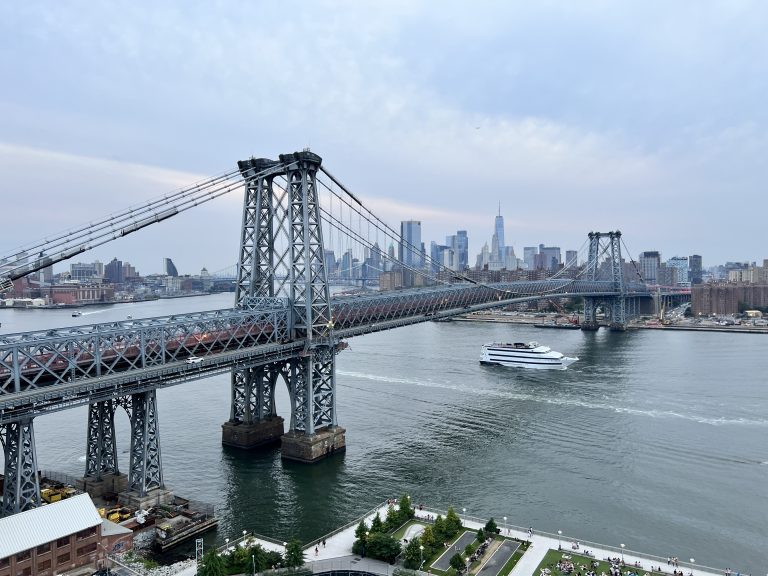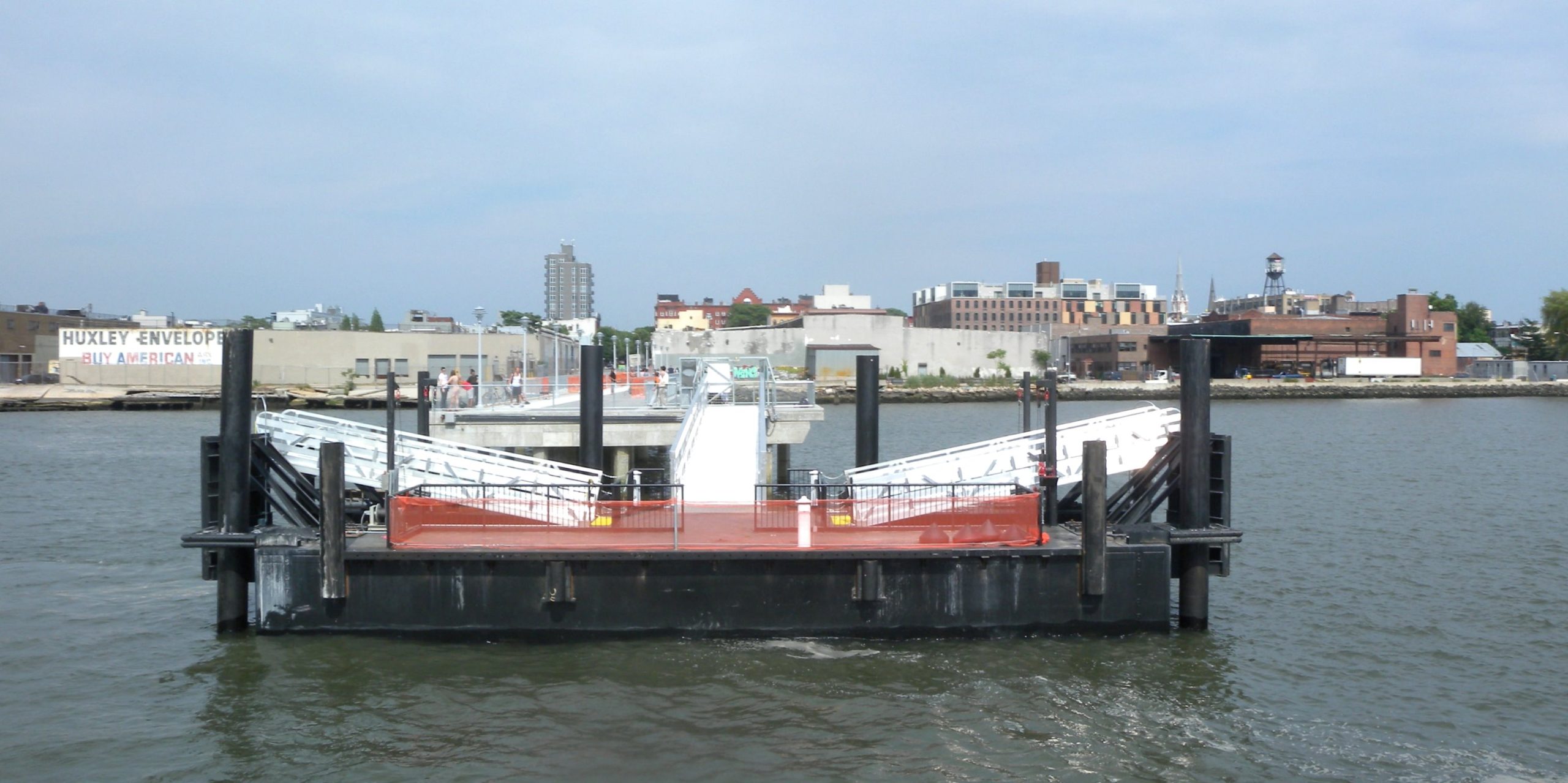
Hush Street is tracking what’s changing in Greenpoint — a neighborhood where the biggest current development story is still, twenty years on, an argument about a single 2005 deal.
That year, the city rezoned the Greenpoint and Williamsburg waterfront to allow towers where there had been factories and rail yards, in exchange for a package of public benefits, chief among them a 27.3-acre Bushwick Inlet Park stretching along the shoreline. The towers arrived. The park largely didn’t: two decades later, the city has completed only a handful of the six parcels that make up the site, roughly 80 percent of its acreage is still closed to the public, and local officials cite a $75–100 million funding gap for what’s left. That imbalance — housing delivered, public-realm promises deferred — is the throughline connecting almost everything below, from the biggest rezoning fight the neighborhood has seen in years to a $3 billion sewage tunnel the city is only now beginning to build.
Where a claim comes from a developer or agency’s own materials rather than independent reporting, we say so.
| Project | Location | Status |
|---|---|---|
| 1Monitor Point | 40 & 56 Quay Street | Council-Approved |
| 2Greenpoint Landing, Phase C | 21 & 37 Freeman St., 209 West St. | Financed / Pre-Construction |
| 357 West Street | 57 West Street (15 Oak St.) | Permits Filed |
| 4McGuinness Boulevard Redesign | Meeker Ave. to the Pulaski Bridge | Under Construction |
| 5Newtown Creek CSO Storage Tunnel | Newtown Creek WRRF | Land Acquisition Underway |
| 6170 Freeman Street | 170 Freeman Street | Completed / Lottery Open |
A Waterfront Still Settling a Twenty-Year-Old Bargain
Six anchors: the largest rezoning fight in Greenpoint in years, the next phase of the neighborhood’s biggest master-planned site, a smaller filing moving forward without any public review at all, a public-realm project that is not about housing but is inseparable from the same waterfront story, a $3 billion public-works project most of the neighborhood can’t see happening, and a finished 67-unit building on the same street as one of this Tracker’s biggest anchors that had gone entirely uncovered until now.
1
Monitor Point
A Site the MTA, Not a Private Owner, Controls
Monitor Point is unusual among Greenpoint’s waterfront towers in that the underlying land isn’t privately assembled — it’s an MTA property, currently home to a bus and van wash facility, that Gotham Organization is developing under a 99-year ground lease rather than an outright purchase. That’s the same basic structure — a public agency monetizing land it already owns rather than a developer buying a site outright — that showed up repeatedly in Bed-Stuy’s recent Tracker, just with the MTA in the role NYCHA and a yeshiva network played there.
The project’s path through public review tracked a real, sourced escalation in its affordability terms rather than a static plan: Gotham’s site plan reportedly proposed roughly 25% affordable housing as of an April 2025 filing; by the time the City Planning Commission approved it 10–1 in May 2026, that figure had risen to around 40% (460 of 1,150 units); and by the City Council’s final vote on July 16, 2026, it had risen again, to 50% — 662 of a now-larger 1,324-unit total. That’s not a typical late-stage trim; unit count and affordability share both grew as the project moved through review, driven by direct negotiation with District 33 Council Member Lincoln Restler, who had said publicly he wouldn’t support the rezoning without a majority-affordable outcome on public land.
What the Approval Actually Includes
Beyond housing, the approved plan commits Gotham to more than 50,000 square feet of open space, a publicly accessible waterfront esplanade connecting Bushwick Inlet Park to the Shore Public Walkway to the north, shoreline resiliency work, and a permanent building for the Greenpoint Monitor Museum — commemorating the USS Monitor, the Civil War ironclad built at the adjacent Continental Iron Works in 1862. Gotham has also committed $300,000 annually toward maintaining Bushwick Inlet Park, the same park whose incompleteness animated much of the opposition to this project in the first place. Save the Inlet organizer Katherine Conkling Thompson argued during review that even 40% affordability was insufficient on public land, and separately flagged that the site sits in a FEMA flood zone — a concern the resiliency commitments were negotiated to address rather than one that was dismissed outright.
Why Construction Is Years Away Despite Approval
Council approval isn’t the same as a start date here. Before Gotham can build anything, the MTA’s own Quay Street facility — the bus and van wash operation the agency currently runs on the site — has to be demolished and relocated elsewhere, a sequencing requirement that trade coverage says pushes realistic project completion to closer to 2031, roughly five years after this approval. It’s a reminder that a public-landowner deal like this one carries its own kind of delay that a straightforward private land sale wouldn’t.
Sources: Gothamist; CBS New York; Commercial Observer; NY1; Gotham Organization
2
Greenpoint Landing, Phase C
The Next Slice of a 5,500-Unit Site
Greenpoint Landing is the 22-acre former industrial waterfront site that, over roughly 15 years, is planned to deliver 5,500 apartments across eleven separate buildings — about 1,400 of them affordable — plus five acres of open space, all under the same 2005 rezoning that produced Bushwick Inlet Park’s obligations. Phase C is the newest slice: a three-way joint venture between the Domain Companies, LMXD, and Park Tower Group, designed by Handel Architects with landscape design by Field Operations, that will add a 40-story, 503-unit tower at 21 Freeman Street; a 30-story, 298-unit tower at 37 Freeman Street; and a nine-story, 224-unit building at 209 West Street — roughly 1,025 units combined, with 300 designated affordable. JLL Capital Markets arranged $114 million in financing, including an $81 million senior land loan from Bank OZK and $33 million in mezzanine financing from InterVest, and the venture targeted breaking ground and “going vertical” in summer 2026, with completion targeted around 2030.
Not to be confused with 170 Freeman Street below — a much smaller, unrelated building a few blocks down the same street, developed independently by a different team years ahead of this phase.
A Public Commitment That Comes With It
Unlike the earlier phases of Greenpoint Landing, Phase C arrives with an explicit public-infrastructure commitment attached: the city plans to build a new 450-seat elementary school at 257 Franklin Street to serve the growing waterfront population these towers are adding. That’s a direct, sourced answer to a common critique of large waterfront rezonings generally — that housing arrives faster than the public infrastructure needed to support it — and it’s worth watching whether the school’s own timeline keeps pace with Phase C’s, the same way Bushwick Inlet Park’s timeline hasn’t kept pace with the housing built under the same 2005 deal a few blocks north.
Recent lottery activity elsewhere on the Greenpoint Landing site gives a sense of what “affordable” has meant here in practice: a 2024 lottery at 35 Commercial Street opened 374 units through the city’s Extremely Low and Low-Income Affordability program, with rents for studios starting just over $400 a month and 57 units set aside for formerly homeless applicants: a floor considerably deeper than Phase C’s blended affordability is likely to reach, since ELLA-program buildings target a lower income band than typical 80/20-style mixed-income towers.
Sources: 6sqft; New York YIMBY; Multi-Housing News; Handel Architects; NYC HPD
3
57 West Street
Growth That Doesn’t Need a Council Vote
Not every project reshaping Greenpoint’s waterfront goes through the kind of public fight Monitor Point did. TF Cornerstone’s filing at 57 West Street — a vacant lot at the corner of West and Oak Streets, closest to the Greenpoint Avenue G train station — is proceeding entirely as-of-right under zoning the 2005 rezoning already put in place, with no rezoning, no ULURP review, and comparatively little press coverage relative to its size: 268 residences in a 13-story building, filed under owner Bruce Weill’s name through architect SLCE. At an average unit size of roughly 929 square feet, the mix leans toward larger units consistent with condominiums rather than rentals, though no offering plan had been filed as of this Tracker to confirm tenure. No demolition permit is expected to be required, since the lot is currently vacant.
The project is a useful reminder that Greenpoint’s waterfront rezoning did most of its work in 2005: two decades later, a building this size can move from a vacant lot to filed permits without a single public hearing, while a comparable-scale project on land that requires a zoning change — like Monitor Point — takes years and multiple rounds of negotiated concessions to reach the same starting line.
Sources: New York YIMBY; Greenpointers
4
McGuinness Boulevard Redesign
Not Housing, but the Same Waterfront Population Question
McGuinness Boulevard is the only building-free project in this Tracker’s original four anchors, but it belongs here for the same reason the planned Franklin Street school does above: a street built for industrial-era traffic volumes is being redesigned around a residential population that’s grown substantially since 2005, much of it from exactly the towers covered elsewhere on this page. Mayor Zohran Mamdani and DOT announced in January 2026 that the city would move forward with the boulevard’s full original redesign — extending the parking-protected bike lanes already in place between Meeker Avenue and Calyer Street north to the Pulaski Bridge — after a prior version of the same plan had been scaled back under the previous administration. Construction began in late May 2026, replacing the corridor’s four travel lanes with one travel lane, one parking-protected bike lane, and one parking/loading lane in each direction, intended to shorten pedestrian crossings and slow turning vehicles. DOT has targeted completion by early fall 2026 — meaning the finished redesign may already be visible by the time this Tracker is read.
A Decade-Long Fight Over a Traffic Corridor
The redesign’s path here matters as much as the design itself: McGuinness Boulevard has been the subject of a multi-year local safety campaign and repeated redesign proposals that stalled or were watered down under prior mayoral administrations, making its 2026 groundbreaking as much a story about municipal follow-through as about traffic engineering. That pattern — a public commitment made, then delayed for years before finally moving forward — runs through Bushwick Inlet Park as well, and now through the sewage-tunnel project below too.
Sources: Greenpointers; NYC Mayor’s Office; Gothamist
5
Newtown Creek CSO Storage Tunnel
A Genuine Gap: the Public-Infrastructure Category This Tracker Hadn’t Checked
This is the kind of project Hush Street’s own methodology specifically flags as easy to miss — a public capital project, not a private building, sited partly underground and easy for coverage to overlook next to towers and rezonings. A bounded search this pass found a real, multibillion-dollar DEP project terminating at Greenpoint’s own wastewater plant, absent from the Tracker entirely until now.
What the Tunnel Actually Does
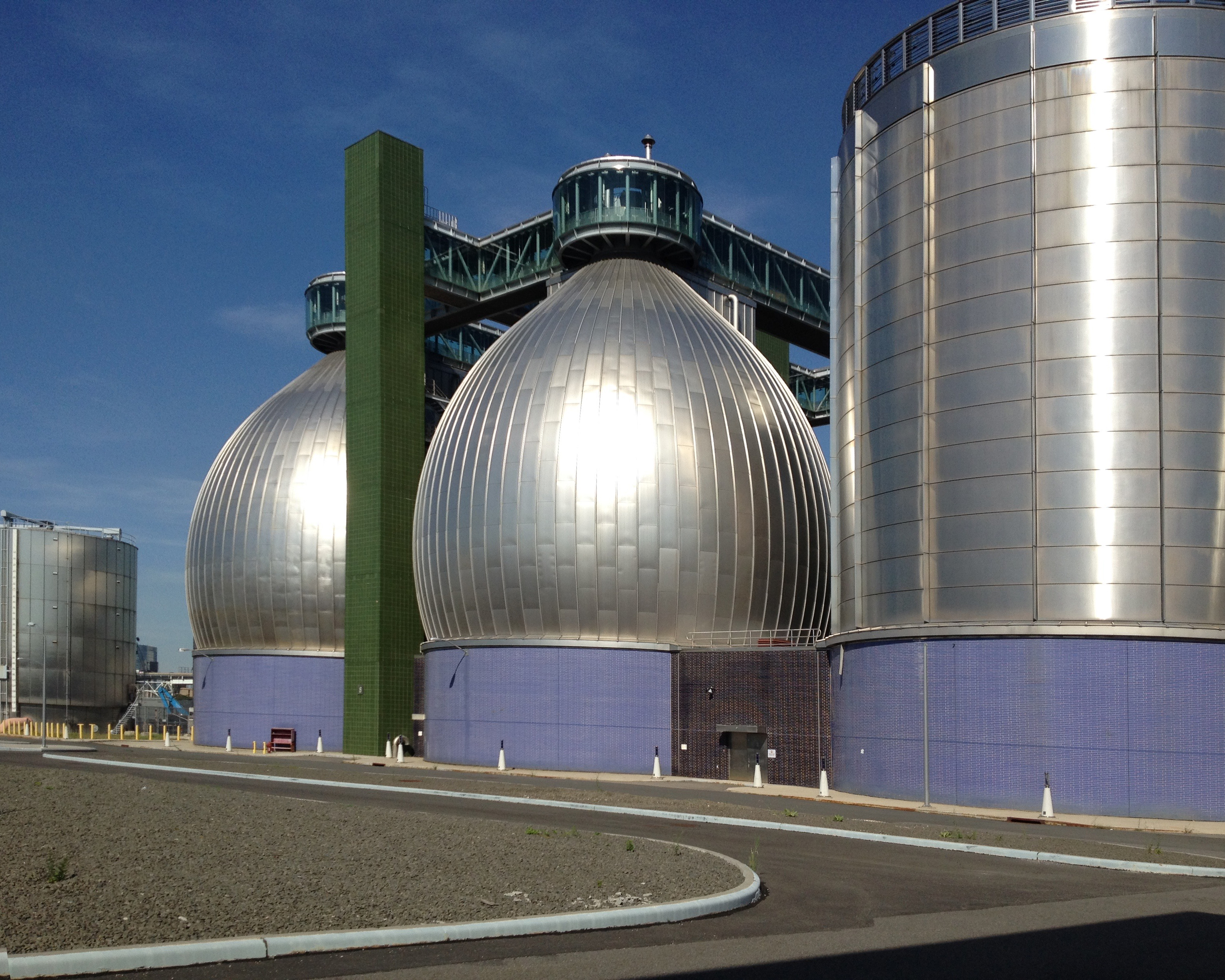
Combined sewer overflows happen when heavy rain overwhelms New York’s shared stormwater-and-sewage pipes, sending a mix of the two directly into local waterways instead of a treatment plant — a major reason Newtown Creek, already a federal Superfund site, has struggled with water quality for decades. DEP’s planned fix is a 3.26-mile underground tunnel running beneath the creek, built to hold excess flow during storms and release it gradually to the Newtown Creek Wastewater Resource Recovery Facility — the plant marked by Greenpoint’s landmark digester eggs — once capacity allows, rather than letting it overflow directly into the creek. The agency estimates the tunnel will cut CSO discharge volume by roughly 70% in an average year.
A Multi-Decade Timeline, Just Getting Started
This is very early-stage work relative to the scale of what’s planned. DEP’s own schedule has land acquisition running from mid-2026 through 2028, when the Department of Sanitation begins prepping sites for construction; the project’s formal consent milestone for construction completion is December 2040 — a reminder that not every project in this Tracker moves on a two-to-five-year horizon, and that public capital works like this one are often planned and funded on a much longer clock than private residential towers.
Sources: NYS DEC; NYC DEP (Final Environmental Impact Statement); Brooklyn Downtown Star
6
170 Freeman Street
A Genuine Gap, on a Street This Tracker Already Covers
A finished, 67-unit, income-restricted building on the same street as Greenpoint Landing’s flagship next phase had gone completely uncovered until this pass — a real oversight worth naming directly rather than folding quietly into the Phase C section above. This is not part of Greenpoint Landing: it’s an unrelated site a few blocks away, developed independently by Green Street Group and ASH NYC.
Financed, Built, and Now Leasing
Green Street Group, through an entity called 170 Freeman LLC, bought the site from Marshall Kesten’s BK Corners LLC and secured a $26 million construction loan from Preferred Bank to build an eight-story, 67-unit rental designed by Ismael Leyva Architects. A $34 million refinancing with Dwight Capital closed in July 2025, and an affordable-housing lottery for 21 units — income-restricted from roughly 70% to 130% of area median income, eligible incomes from about $66,412 to $227,500 — launched in April 2026. Amenities include a rooftop terrace, gym, and EV charging, per the building’s own marketing.
Sources: New York YIMBY; Pincus Co.; Pincus Co. (refinancing); Green Street (developer marketing)
The Park That Started the Deal, Still Unfinished
Every project above sits within a few blocks of Bushwick Inlet Park, and none of them can really be understood apart from it. The city owns the full 27.3-acre site along the Greenpoint and Williamsburg waterfront, promised as part of the 2005 rezoning that unlocked Monitor Point’s, Greenpoint Landing’s, and 57 West Street’s underlying zoning in the first place. Two decades later, the city has completed work on only three of the six parcels that make up the park — most recently the roughly 1.66-acre “Motiva” parcel NYC Parks opened in June 2026 — leaving the large majority of the site’s acreage still closed to the public. Local officials cite a $75–100 million funding gap for what’s left, including the Bayside parcel, currently unfunded and tied up in negotiations over environmental remediation, and the CitiStorage North and South sites to its south. Gotham’s $300,000 annual commitment at Monitor Point and the waterfront esplanade extensions built into both Monitor Point and Greenpoint Landing are best read as targeted, project-by-project attempts to make good on a public-realm promise the city itself has not funded at the scale it originally made it.
McCarren Park, which straddles Greenpoint’s southern boundary with Williamsburg, is going through its own smaller-scale public-realm investment at the same time — a bathhouse roof and exterior reconstruction, an asphalt-lot-to-green-space conversion, and a ballfield reconstruction. Hush Street’s Williamsburg Tracker covers those projects in depth, since the park’s main frontage and the CB1 presentations covering the work sit on that side of the boundary.
What We’re Watching Next
The clearest open question is whether Monitor Point’s now-2031 construction timeline and Bushwick Inlet Park’s funding gap move in step, or whether the neighborhood ends up with another cycle of towers arriving well ahead of the public space they were supposed to help pay for. It’s also worth watching whether 57 West Street’s unit mix is confirmed as condominium or rental once an offering plan is filed, whether Greenpoint Landing Phase C’s own groundbreaking is confirmed, and whether the Franklin Street elementary school tied to that phase stays on a timeline that keeps pace with the housing it’s meant to serve.
A handful of smaller permit filings are also moving forward without individual sections here, consistent with the rule against padding a Tracker with routine permits: 191 Greenpoint Avenue and 64 Green Street (five residences each), 144 Greenpoint Avenue (a six-story building targeting spring 2027 completion), and LPC-approved revised plans for 122-124 Greenpoint Avenue.
Greenpoint borders Williamsburg to the south, across the same 2005 rezoning boundary; projects on the Williamsburg side of that line, including One Domino Square and 1 Wythe Avenue, are covered in that neighborhood’s own Tracker rather than duplicated here.
Capital & Transactions
Money Moving in Greenpoint
A curated look at recent property sales and financing that help explain who’s buying, building, and lending in Greenpoint right now. Drawn from New York City’s public ACRIS property records, not a complete log of every filing — we include only transactions that say something real about the neighborhood’s direction, and leave out routine paperwork, internal transfers, and deals we can’t explain responsibly.
150 Green StreetJun. 2026
Development firm Investmates bought this single-story retail building — the former Faurschou/Ilis building site, whose closure displaced a longtime local business — for $25.55 million, with a roughly $21 million acquisition loan from Northwind Group, confirmed by Commercial Observer and Crain’s New York Business. The site is turning into condos, per Greenpointers. Not currently in Hush Street’s Greenpoint registry.
514–516 Graham Avenue — and Newton StreetJul. 2026
A confirmed active development site: Alpha Properties NYC lists 514–516 Graham Avenue as a 13-residence condo building slated for 2027 completion. Not currently in Hush Street’s Greenpoint registry.
1139–1145 Manhattan Avenue / 99 Commercial StreetAug. 2026
New 2026 financing on a confirmed Greenpoint commercial/industrial complex previously assembled for $35.5 million in 2024 — a $33 million loan agreement with a newly formed lending vehicle, Greenpoint 2026-01 Lender, LLC, which also took assignment of a prior $25 million loan from DB 360 Asset Holdings LLC. Read as refinancing/restructuring on an identified property, not confirmed new ownership or construction.
Source: New York City’s public ACRIS property records. This module is reviewed and curated by Hush Street editors, not an automated feed, and will be updated as new, meaningful filings are confirmed.
By Hush Street Editorial Updated Built from city filings and published reporting. About Hush Street