270 Park Avenue: JPMorgan Chase’s New Global Headquarters
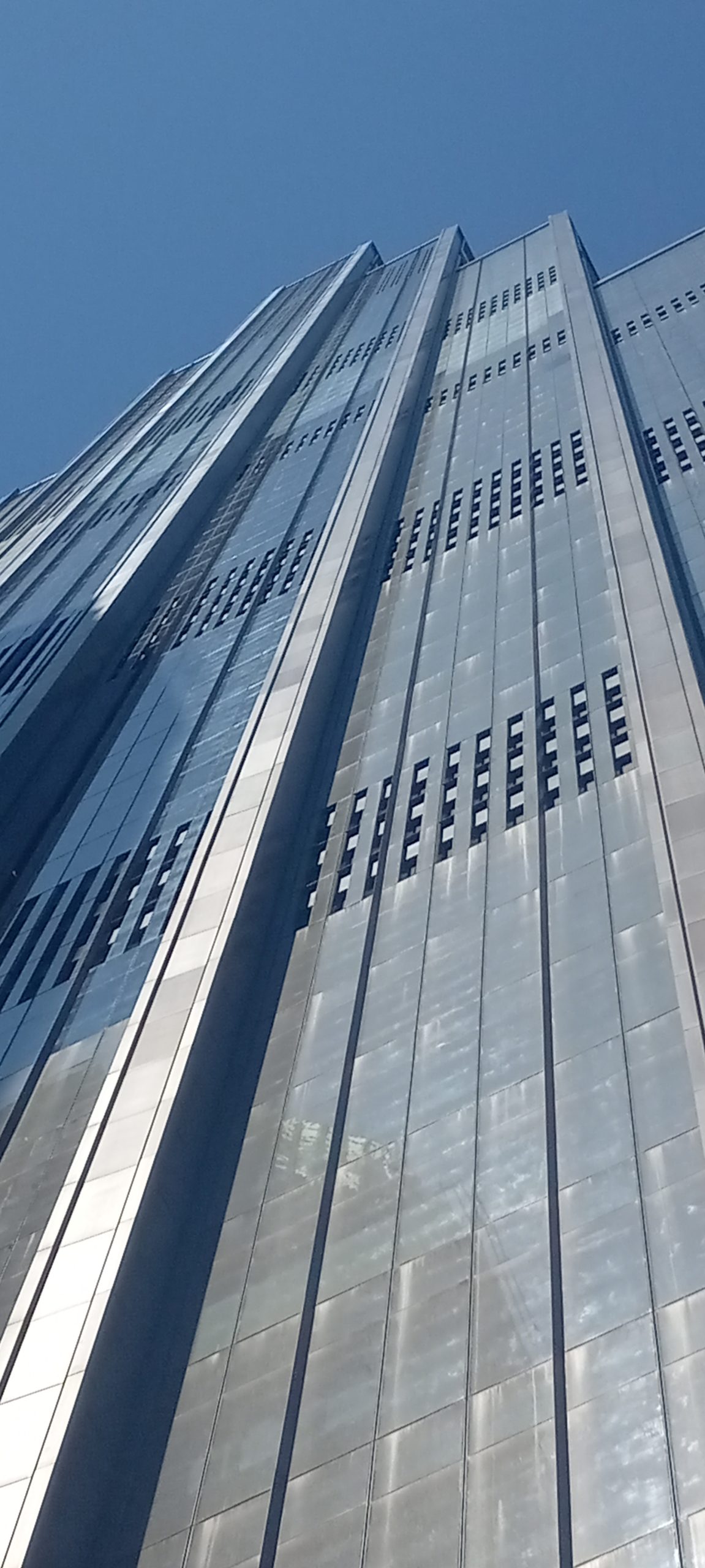
Photo above: 270 Park Avenue, photographed August 2025, shortly after substantial completion. Photo by Kidfly182 via Wikimedia Commons, CC BY 4.0.
JPMorgan Chase formally opened 270 Park Avenue with a ribbon-cutting ceremony on October 21, 2025, after employees began moving in the previous August. The bank’s new global headquarters — a 60-story, 1,388-foot Foster + Partners tower with roughly 2.5 million square feet of workspace — is now JPMorgan’s operating home base, with occupancy targeted to reach 10,000 employees by the end of 2025 and full building capacity cited elsewhere at up to 15,000.
Current View
270 Park Avenue on its opening day, from JPMorgan Chase’s own official account:
At a Glance
- JPMorgan Chase’s new global headquarters — 60 stories, 1,388 feet, roughly 2.5 million square feet, designed by Foster + Partners.
- Replaced the 52-story Union Carbide Building on the same site, demolished 2019-2021 in what became the largest voluntary demolition in New York City history.
- Opened October 21, 2025, after a $3 billion, self-funded construction project with no outside developer.
- Marketed as New York City’s largest all-electric office tower, powered by upstate hydroelectric energy.
What Is 270 Park Avenue?
270 Park Avenue is JPMorgan Chase’s new global headquarters, a 60-story, 1,388-foot tower in Midtown East designed by Foster + Partners with Adamson Associates as architect of record. The bank self-developed the project on its own site rather than working with an outside developer, with Gensler leading workplace interiors and AECOM Tishman serving as construction manager.
The tower holds roughly 2.5 million square feet, and JPMorgan has said it will house up to 10,000 employees by the end of 2025, with full building capacity cited elsewhere at up to 15,000.
Replacing the Union Carbide Building
The site’s previous tower, the Union Carbide Building, opened in 1960 — a 52-story, 707-foot tower designed by Gordon Bunshaft and Natalie de Blois of Skidmore, Owings & Merrill for original tenant Union Carbide Corporation.
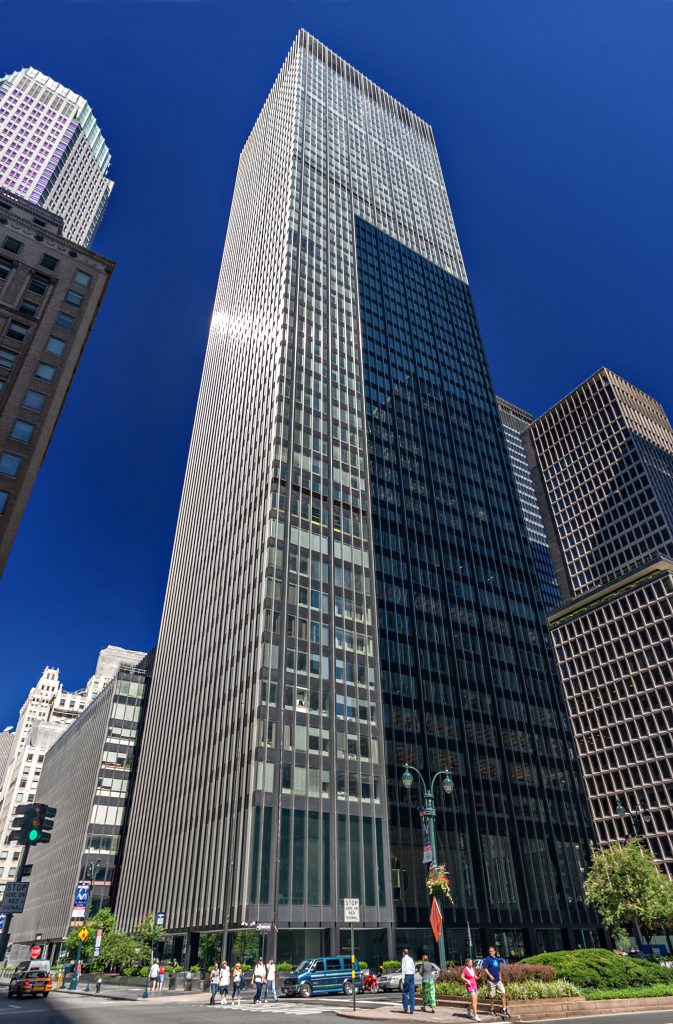
The Union Carbide Building at 270 Park Avenue, photographed in 2007, more than a decade before its demolition. Photo by Mathias Beinling via Wikimedia Commons, CC BY-SA 4.0.
Ownership passed through a chain of bank mergers between 1980 and 2000: Manufacturers Hanover became Chemical Bank, which became Chase Manhattan, which merged with J.P. Morgan & Co. to form JPMorgan Chase. The Union Carbide Building became JPMorgan Chase’s world headquarters.
A 2017 rezoning of the Greater East Midtown district permitted a substantially taller replacement structure than the 1960 building’s original zoning allowed. JPMorgan Chase announced in February 2018 that it would demolish the tower and build a new headquarters roughly twice its height, and demolition began the following year.
By mid-2021, the Union Carbide Building had become the tallest building ever voluntarily demolished in New York City — described at the time as the largest voluntary demolition in the city’s history — with 97% of its materials recycled, reused, or diverted from landfills.
Building the New Tower
Construction on the new 270 Park Avenue broke ground April 8, 2021, as demolition of the old building was finishing. The tower topped out November 20, 2023, and reached substantial completion on August 25, 2025.
Employees began moving in that same month, and JPMorgan Chase held a formal ribbon-cutting and grand opening on October 21, 2025.
Building Over Active Rail Tracks
270 Park Avenue sits directly above Grand Central Terminal and Grand Central Madison, with active Metro-North and Long Island Rail Road tracks running beneath the site. Engineers had to work within “dynamic envelopes” as narrow as 48 inches between moving trains to find viable places to put foundations at all.
The solution is a two-story steel structure engineers call the “Tabletop” — twin 25-foot-deep plate girders, each roughly 1,800 tons, spanning the building’s full 360-foot length. Three fan-shaped column clusters and diagonal macro-braces gather the tower’s loads and funnel them down to the small number of foundation points the tracks below actually allow.
A 280-ton tuned mass damper, suspended on 46-foot cables at the 54th floor, helps control the building’s sway in wind — a common feature on supertalls, but paired here with over 150 rounds of vibration modeling calibrated against real train-noise measurements taken from the old Union Carbide Building before it came down.
“A closer look at 270 Park Avenue,” Foster + Partners’ own design team on the building’s engineering and construction.
Sustainability Claims, Weighed Against a Real Counterpoint
JPMorgan Chase describes 270 Park Avenue as New York City’s largest all-electric tower with net zero operational emissions, powered entirely by upstate New York hydroelectric energy and designed to LEED Platinum v4 and WELL Health-Safety standards.
Those claims are worth reading alongside a real critique: some architecture criticism has pointed out that a “zero operational emissions” framing doesn’t account for the large embodied-carbon cost of demolishing a 52-story building and constructing a new 1,388-foot supertall in its place — a tension between operational and embodied emissions that applies to any tear-down-and-rebuild project marketed as sustainable, not unique to this one.
Employee Capacity: Two Different Numbers
JPMorgan Chase’s own newsroom cites 10,000 employees by the end of 2025 as the occupancy target. Other reporting puts the building’s full design capacity meaningfully higher, at up to 15,000.
The two figures aren’t necessarily in conflict — 10,000 reads as an initial-occupancy ramp target, not the building’s ceiling — but Hush Street reports both rather than picking one.
A Shared JPMorgan Chase Campus
270 Park Avenue isn’t the only Manhattan tower carrying JPMorgan Chase’s name, and it isn’t the bank’s first Manhattan headquarters, either — predecessor Chase Manhattan was headquartered downtown at 1 Chase Manhattan Plaza for decades before the bank’s operations consolidated uptown.
In November 2000, the bank leased 580,000 square feet at 245 Park Avenue, a few blocks away, as part of a corporate campus alongside its own building at 270 Park Avenue — a real, pre-existing connection between the two properties, not a coincidence of shared ownership.
JPMorgan is separately renovating another major Manhattan tower it owns, 383 Madison Avenue, the former Bear Stearns headquarters.
Timeline
Designed by Gordon Bunshaft and Natalie de Blois of Skidmore, Owings & Merrill for original tenant Union Carbide Corporation; 52 stories, 707 feet.
Manufacturers Hanover (1980) merges into Chemical Bank (1991), which merges into Chase Manhattan (1995), which merges with J.P. Morgan & Co. to form JPMorgan Chase (2000) -- the building becomes JPMorgan Chase's world headquarters.
Permits a substantially taller replacement structure on the site than the 1960 building's original zoning allowed.
Confirms plans to replace the Union Carbide Building with a new, nearly twice-as-tall tower.
What became the largest voluntary demolition in New York City history.
The Union Carbide Building becomes the tallest building ever voluntarily demolished, with 97% of materials recycled, reused, or diverted from landfills.
Formal ceremony marking the structure reaching its full height.
JPMorgan Chase's new global headquarters officially opens.
Location
270 Park Avenue sits in Midtown East between East 47th and 48th Streets, a few blocks north of Grand Central Terminal. View on Google Maps.
Sources
Sources: Wikipedia (270 Park Avenue, 2025-present); Wikipedia (270 Park Avenue, 1960-2021); JPMorganChase; Dezeen; Architectural Record; New York YIMBY (demolition); New York YIMBY (opening); The Real Deal; STRUCTURE Magazine (engineering); Foster + Partners.
270 Park Avenue was part of a shared JPMorgan Chase campus with 245 Park Avenue, and is one of two major current JPMorgan Chase towers Hush Street covers — the other is 383 Madison Avenue.

Hush Street Editorial researches and reports on the projects, permits, and physical changes reshaping Brooklyn — and, more broadly, New York City. Reporting draws on primary-source city records — Department of Buildings filings, land-use and planning applications, agency and community-board documents — verified and cross-checked against independent reporting where it exists. Coverage is continuously updated as new filings and decisions are recorded, and confirmed facts are distinguished from open questions.