Hush Street is tracking what’s changing in Canarsie.
This neighborhood’s development story isn’t a private tower boom, and it shouldn’t be read through Downtown Brooklyn or Williamsburg’s construction-wave playbook.
Canarsie’s biggest projects right now are public money doing public work: a $757 million overhaul of a 1950s public-housing complex, a mass-timber library rebuild, and more than a decade of flood infrastructure responding to a 2013 federal map that put two-thirds of the neighborhood in a flood zone overnight.
That isn’t an accident of geography. Canarsie sits on a peninsula between Jamaica Bay and Fresh Creek, with roughly 88,500 residents as of the 2020 Census and only one subway line — the L train, ending at Canarsie-Rockaway Parkway — connecting it to the rest of the city.
The neighborhood was farmland and a summer bungalow colony into the early 20th century before postwar row houses filled it in; it’s now one of Brooklyn’s most heavily Caribbean and West Indian neighborhoods, a demographic shift largely completed by the 2000s.
Private residential filings continue too, but at a modest scale — nothing here resembles the rezoning fights reshaping Sunset Park or Gowanus.
Where a claim comes from a developer, agency press office, or community source rather than independent reporting, we say so.
| Project | Location | Status |
|---|---|---|
| 1Bay View Houses PACT Renovation | Seaview Ave. to Shore & Rockaway Pkwys. | Under Construction |
| 2New Canarsie Library | 1580 Rockaway Parkway | Under Construction |
| 3Fresh Creek & Flood Resilience | Avenues K-N & Seaview Ave., citywide-funded | Completed |
| 4Rockaway Parkway Corridor Infill | 755 E. 85th St. & 17 Church Lane | Filed, Unconfirmed Since |
A Neighborhood Rebuilt by Public Agencies, Not Private Towers
A public-housing complex old enough to be historic, a library made of wood, and a decade of tide gates and rain gardens describe a neighborhood where government investment is doing more visible work than the private market.
1
Bay View Houses PACT Renovation
From Middle-Income Housing to a National Register Listing
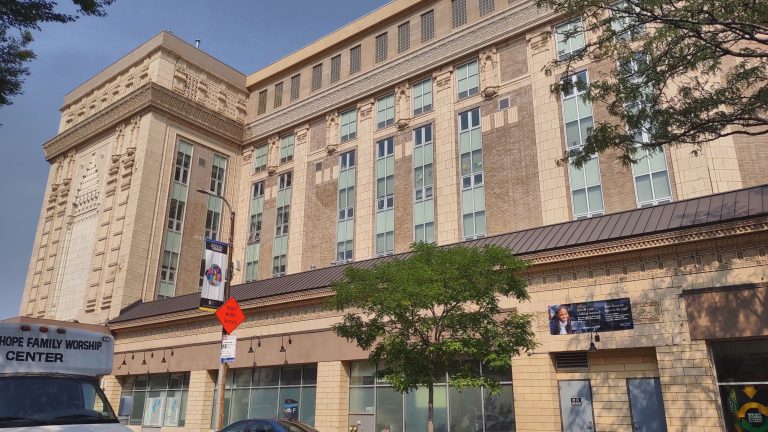
Bay View Houses opened in 1956, built by NYCHA in the “superblock” style — buildings set back from surrounding streets, with no roads cutting through the 34-acre site — specifically to keep middle-income families from leaving the city for the suburbs.
The complex made the National Register of Historic Places on February 26, 2026, reference number SG100012749, even as a gut renovation moves through its buildings.
Its best-known former resident is Howard Schultz, the former Starbucks CEO, who grew up here; a community farm, run today by East New York Farms, still occupies part of the complex’s shared green space.
The Largest Financing Package NYCHA Has Closed in Canarsie
NYCHA first announced a roughly $665 million PACT renovation plan for Bay View in March 2024, converting the development from traditional public housing funding to Project-Based Section 8 under the federal Rental Assistance Demonstration program.
That plan became a real, closed $757 million financing package on December 23, 2025 — covering roughly 3,100 to 3,500 residents, per NYCHA’s own figures across its announcements.
The scope includes new cold-climate packaged window heat pumps across the complex, which NYCHA describes as its largest heating electrification project under Clean Heat for All to date, plus renovated lobbies, building systems, and a resident social-services plan run with IMPACCT Brooklyn.
“This investment is a monumental step forward for the thousands of New Yorkers who call Bay View Houses home,” NYCHA CEO Lisa Bova-Hiatt said when the financing closed. Tenant Association President Sheryl Boyce struck a similar note: “Due to all of the diligent work by the development team and PACT partners, Bay View will be a viable community once again.”
Sources: NYCHA (Dec. 2025); NYC Housing Development Corporation (March 2024); Brooklyn Eagle; National Register of Historic Places listing
2
New Canarsie Library
One of New York’s First Public Mass-Timber Buildings
Instead of a conventional steel-and-concrete frame, the new library uses cross-laminated timber — engineered, prefabricated wood panels — as its structural system, part of the city’s NYC Mass Timber Studio initiative to test the material in public buildings.
Studio Joseph principal Wendy Joseph has described the design as “forged by public engagement,” with a building “transparent by day and a lantern by night.”
Shawmut Design and Construction, the general contractor, broke ground on the branch on February 9, 2026, at the same Rockaway Parkway and Avenue J site as the prior, smaller library.
Funded Partly by Another Brooklyn Library’s Redevelopment
The $30.9 million project draws on a genuinely mixed funding stack: roughly $20 million in city capital allocations, a $3.5 million New York State library-construction grant secured by State Senator Roxanne Persaud, and — notably — proceeds from the redevelopment of Brooklyn Public Library’s own Brooklyn Heights Library elsewhere in the borough.
That funding structure means one borough library’s real-estate deal is directly subsidizing new construction in a neighborhood with a very different development profile.
The new branch will double the public floor area of the building it replaces, which BPL describes as badly overdue for replacement.
Sources: 6sqft; Brooklyn Public Library; NY State Senate; New York YIMBY (Feb. 2026); Construction Dive/ConstructConnect (July 2026)
3
Fresh Creek & Flood Resilience
Two-Thirds of Canarsie Fell Into a Flood Zone Overnight
Before 2013, almost none of Canarsie sat inside a federally designated flood zone.
When FEMA released its Preliminary Flood Insurance Rate Maps that year, roughly two-thirds of the neighborhood was suddenly included, and the number of buildings in the 1%-annual-chance floodplain jumped from about 25 to roughly 5,000.
The city’s Department of City Planning spent more than three years afterward on a dedicated Canarsie Resilient Neighborhoods study, publishing zoning and land-use recommendations alongside the infrastructure investment below.
What’s Actually Been Built So Far
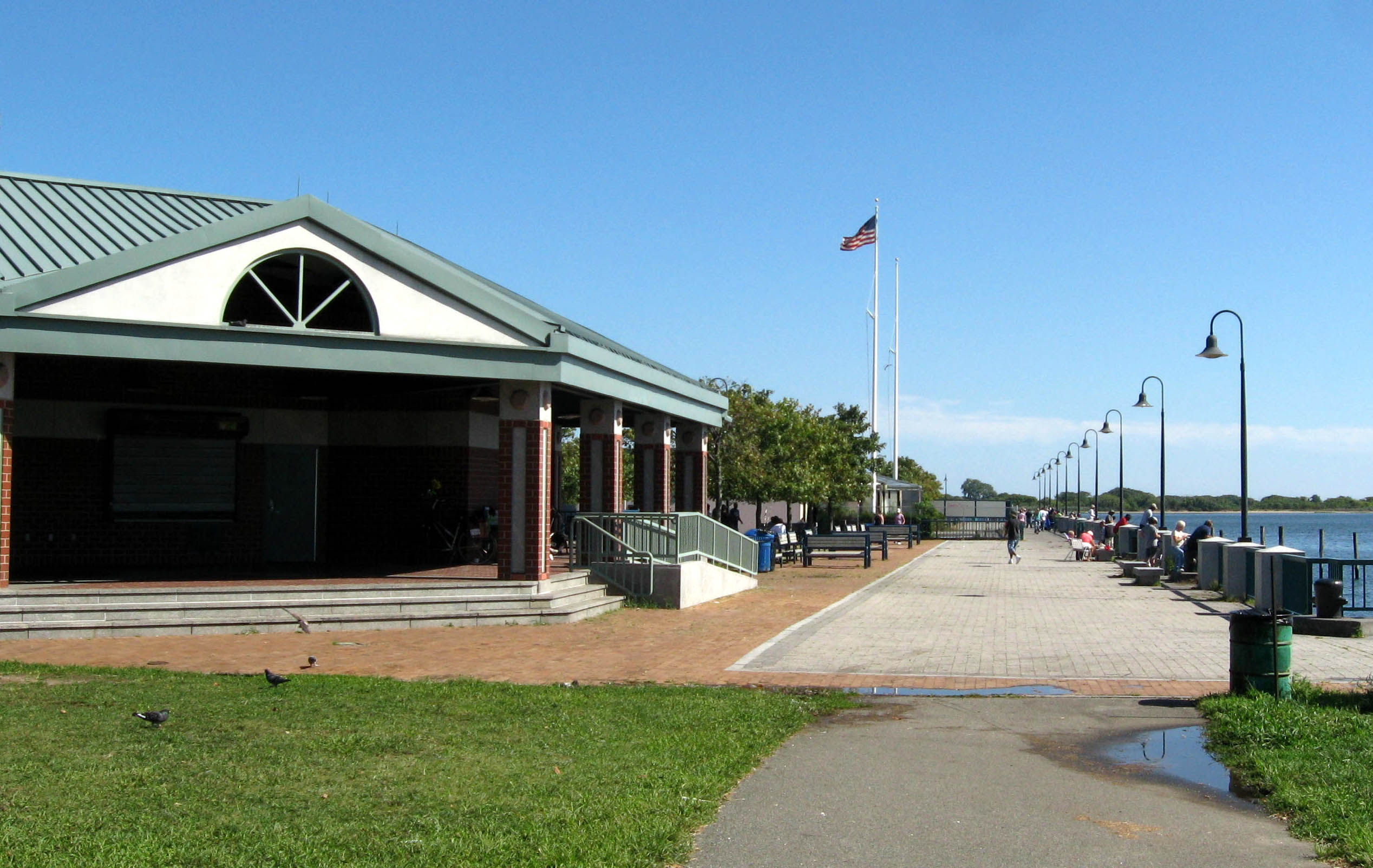
The Fresh Creek Coastal Protection Project, a $14 million effort led by the Governor’s Office of Storm Recovery, installed new tide-gate chambers in culverts feeding Fresh Creek at Avenues K, L, M, N and Seaview Avenue, plus a rebuilt Avenue M outfall pipe.
Construction ran from October 2021 through late 2022; the finished project later won an engineering excellence award from the American Council of Engineering Companies.
Separately, the city’s Department of Environmental Protection and NYCEDC completed a $42.3 million green-infrastructure project across Canarsie and neighboring East Flatbush in April 2025 — nearly 1,200 rain gardens and infiltration basins designed to capture about 122.5 million gallons of stormwater a year before it can flood streets.
Neither project is the federal government’s long-discussed regional storm-surge gate system for Jamaica Bay, part of a roughly $52 billion Army Corps of Engineers proposal covering 12 surge gates from upper Manhattan down through Jamaica Bay, Coney Island Creek, and the Gowanus Canal — with construction not expected to begin before 2030 and finish before 2044. That’s a genuinely separate, much larger, and still-unfunded undertaking worth distinguishing from the local work already finished.
Sources: NYC Department of City Planning; NY Governor’s Office (2021); Brooklyn Paper; NYCEDC (2025); City & State New York
4
Rockaway Parkway Corridor Infill
Two Filings, Two Different Bets
At 755 East 85th Street, near Glenwood Road and Flatlands Avenue, permits describe a seven-story building with 106 units averaging 662 square feet — small enough to suggest condos rather than rentals — with 53 parking spaces split between enclosed and open.
At 17 Church Lane, closer to Remsen Avenue, a nine-story, 108-foot building would add 42 units averaging 938 square feet, plus ground-floor community-facility space, over eight enclosed parking spots — a larger-unit profile more typical of rental construction.
Both sit within a few blocks of the Canarsie-Rockaway Parkway L train terminal, this neighborhood’s only subway access.
Filed in 2023, Quiet Since
Neither filing has a confirmed construction start, certificate of occupancy, or public update in the sources reviewed for this Tracker — worth noting plainly rather than assuming either project is moving.
Smaller, as-of-right filings round out the same general corridor, including a four-story mixed-use building at 8617 Flatlands Avenue filed by Eugene Josovits’s 8623 Flatlands Realty LLC, with Ruslan Goychayev of RSLN Architecture as architect of record.
None of these smaller filings rises to its own section, but together they show ordinary infill continuing along Flatlands and Rockaway Parkway independent of the three larger public projects above.
Sources: New York YIMBY (2020, 2023)
What We’re Watching Next
The clearest open question is whether the Army Corps’ regional Jamaica Bay storm-surge plan ever secures funding — at a proposed 2030 construction start, it remains years away and entirely separate from the resilience work Canarsie has already completed.
It’s also worth watching whether the two 2023 Rockaway Parkway filings ever convert to real construction permits, and whether the Canarsie Library’s mass-timber construction — now past demolition and into foundation work as of July 2026 — stays on its 2027 completion target.
Canarsie borders East Flatbush to the northwest, Flatlands to the west, Bergen Beach to the southwest, and Brownsville to the north, with Jamaica Bay forming its entire southern edge. Unlike those neighbors, Canarsie’s current story isn’t led by a single rezoning or a private construction wave — it’s a public-sector rebuild of housing, civic space, and shoreline infrastructure that predates the current wave of Brooklyn towers by decades and will outlast most of it.
Taken together, these four anchors describe a neighborhood whose most consequential change is arriving through public agencies rather than private capital: a historic public-housing complex being rebuilt in place, a library reimagined in wood, a shoreline hardened against water that wasn’t a legal threat a generation ago, and a handful of small buildings filling in the blocks around a single subway line.
By Hush Street Editorial Updated Built from city filings and published reporting. About Hush Street