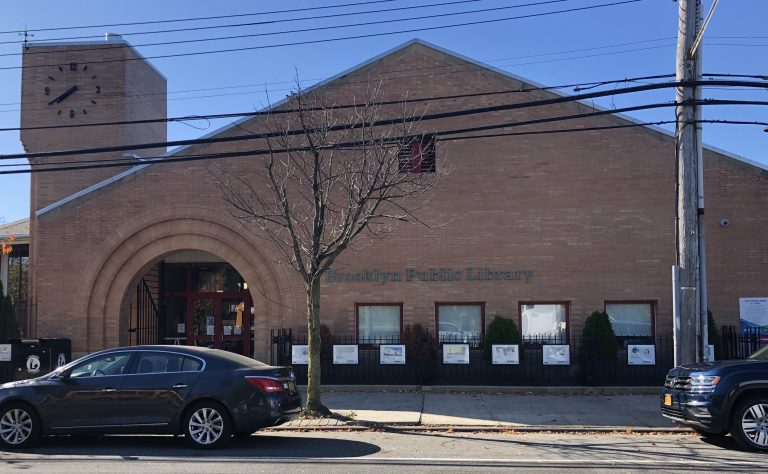
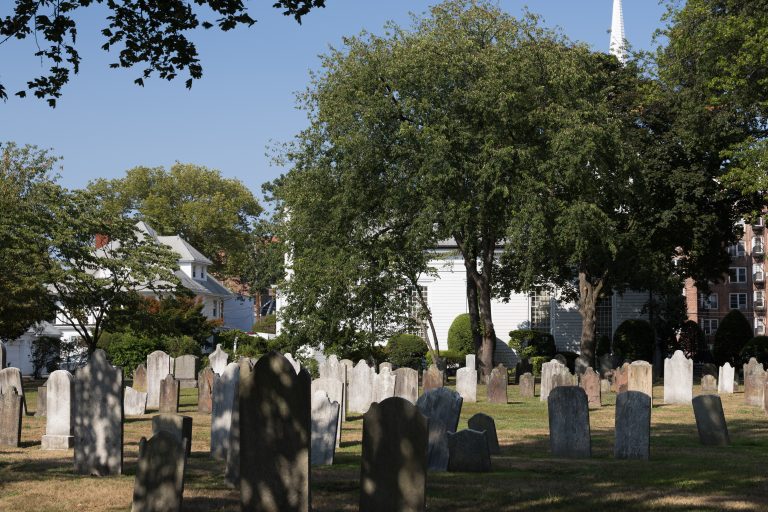
Hush Street is tracking what’s changing in Marine Park.
Don’t expect a rezoning fight or a wave of new apartment buildings here. Marine Park’s current story isn’t private construction at all — it’s two public investments in the neighborhood’s own identity.
Marine Park is bounded roughly by Gerritsen Avenue, Flatbush Avenue, Avenue U, and Kings Highway, a footprint of almost entirely one- and two-family homes that has stayed remarkably stable for decades. There’s no active rezoning application here, and a search of recent permit filings turns up almost nothing — a genuinely different pattern than nearly every other Brooklyn neighborhood Hush Street has tracked.
What’s actually happening sits inside the 530-acre park the neighborhood is named for, and inside one 306-year-old farmhouse a few blocks from it.
The park itself — salt marsh, grassland, a golf course, ballfields — was laid out by planner Charles Downing Lay, whose design won a silver medal in town planning at the 1936 Olympics’ art competitions. It borders Gateway National Recreation Area, one of the first urban national parks in the country.
A short walk from the marsh sits the Hendrick I. Lott House, built in 1720 and expanded in 1800 — one of the oldest houses standing in Brooklyn, and a building with a history far more complicated than its quiet residential block suggests.
Where a claim comes from a nonprofit, agency press office, or community source rather than independent reporting, we say so.
| Project | Location | Status |
|---|---|---|
| 1Hendrick I. Lott House Restoration | 1940 E. 36th St. | Funded, Start Unconfirmed |
| 2Marine Park Salt Marsh & Forest Restoration | Gerritsen Creek / Salt Marsh Nature Center | Under Construction |
A Neighborhood That’s Developing Its Past, Not Its Lots
Marine Park’s housing stock has barely moved in years, and no rezoning is on the table. What’s actually under construction here is public: a landmark farmhouse becoming a museum, and a $1.2 million restoration of the salt marsh that gives the neighborhood its name.
1
Hendrick I. Lott House Restoration
A House With a Complicated History
The Lott family arrived from Holland in 1652 and acquired this land in 1719. What visitors will eventually tour isn’t a simple farmhouse story: the Lotts were, according to the Friends of the Lott House’s own account, the largest slave-owning family in the area, and enslaved people on the property cultivated crops shipped to Manhattan markets.
The family freed the people they enslaved in 1805 — 22 years before New York State abolished slavery outright — and the house later became a stop on the Underground Railroad, with a hidden closet believed to have sheltered people fleeing slavery.
New York City bought the house in 2002. The last direct Lott descendant had moved out in 1989, and the volunteer group Friends of the Lott House, founded in the early 1990s when the property had fallen into disrepair, has driven its preservation ever since.
From Landmark to Museum
“It’s finally time,” Friends of the Lott House president Alyssa Loorya said in the group’s own announcement of the restoration. “We cannot wait for this next phase to start. We are eager to open the doors and invite the community in to share in the rich history.”
The house is both a National Register of Historic Places listing and a New York City landmark, but it has never operated as a full public museum. This restoration is meant to change that — modernizing the building’s infrastructure enough to support regular public access while preserving its 300-year-old fabric.
Ahead of construction, Friends of the Lott House has been running limited hard-hat tours of the property, a rare chance to see the house before the work begins.
Sources: The Art Newspaper (May 2025); Brownstoner; Friends of the Lott House
2
Marine Park Salt Marsh & Forest Restoration
Building on a Decade of Restoration
This project continues a longer effort along Gerritsen Creek. The U.S. Army Corps of Engineers previously budgeted $8.3 million for an earlier phase of salt-marsh restoration here, removing invasive species and decades of dumped fill before adding clean sand to let native vegetation take hold — work NYC Parks now actively monitors for the health of fiddler crabs, ribbed mussels, and other marsh species.
The current phase extends that work into the surrounding forest, addressing what NYC Parks describes as soil depleted by years of neglect, with goals of improving air and water quality alongside wildlife habitat.
Brooklyn College journalism students reported the project’s spending had reached just 2% of its budget as of late 2023, shortly after construction began — a normal pattern for a project whose heaviest costs land in its later construction years, not evidence of a stalled project.
The Park That Gave the Neighborhood Its Name
Marine Park ranger Jermaine Scotten told Brooklyn College’s journalism program that the hiking trail will stay open throughout construction, with only active work sites blocked off — meaning the restoration is happening in a park residents are still using, not a closed construction site.
Sources: Brooklyn College Journalism (Nov. 2023); U.S. Army Corps of Engineers, New York District
What We’re Watching Next
Marine Park Golf Course, the park’s 18-hole Robert Trent Jones Sr.-designed course, has its own smaller, ongoing capital work — soil aeration, irrigation and drainage upgrades, and a planned entrance-and-clubhouse path reconstruction — but without a confirmed public budget or completion date, it isn’t included here as a full anchor.
It’s also worth watching whether the Lott House restoration stays on its roughly 18-month timeline once construction actually starts in early 2026, and whether NYC Parks’ own November 2026 completion estimate for the salt-marsh and forest work holds against the City Comptroller’s later January 2027 date.
Marine Park borders Homecrest to the west, Flatlands to the north and east, Mill Basin to the east, Gerritsen Beach to the south, and Sheepshead Bay to the southwest. One adjacent, genuinely newsworthy project was deliberately kept out of this Tracker: Launch, a new experiential-learning high school campus opening in 2026 at Floyd Bennett Field. Despite sitting just south of Marine Park and sharing its Gateway National Recreation Area context with the neighborhood’s own park, Floyd Bennett Field sits outside Marine Park’s official Community Board 18 boundary (south of Flatbush Avenue, on federal National Park Service land) — a distinct area, not this neighborhood’s own development story.
Taken together, these two projects describe a neighborhood whose current investment isn’t in new construction at all, but in preserving what’s already here: a 300-year-old house finally becoming the public museum its volunteers have worked toward for three decades, and a marsh and forest slowly being brought back to the condition they were in before a century of fill and neglect.
By Hush Street Editorial Updated Built from city filings and published reporting. About Hush Street